











The future of customer marketing lies in the transformative power of generative AI.
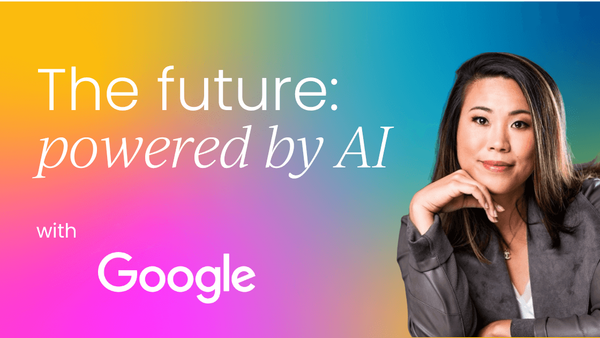
I’m Emi Wayner, Senior Customer Marketing Manager at Google Cloud. Over my years at Google, working across Ads, YouTube, Maps, and Cloud, I’ve built up a deep understanding of how to connect with customers in meaningful ways.
In this article, I’ll share my vision for scaling customer marketing using generative AI, exploring strategies, tools, and practical steps to enhance productivity, improve customer experiences, and drive organizational impact.
The four pillars of customer marketing
When I think about customer marketing, I see it anchored by four key pillars, each one playing a crucial role in shaping how we connect with and deliver value to our customers.
1. Customer storytelling
Storytelling is at the heart of what we do—it’s in our DNA as customer marketers. We uncover and amplify customer stories, empowering customers to share their successes alongside our own.
These stories build credibility, inspire others, and highlight the mutual value of our partnerships.
2. Customer engagement
Customer engagement can take many forms, depending on your organization. It could involve events, webinars, peer-to-peer networking, or even community-building initiatives.
This pillar is an emerging field, offering endless possibilities for creativity.
Advocacy programs, awards, recognition events, and incentive programs all fall under this umbrella. Your ability to innovate and scale engagement strategies will be key to success.
3. Community building
Community building is where creativity and productivity shine. A well-crafted community fosters collaboration, trust, and a sense of belonging among your customers.
Whether through forums, exclusive events, or shared learning opportunities, strong communities can transform transactional relationships into long-lasting partnerships.
4. Voice of the customer
The voice of the customer represents a massive opportunity for customer marketers. While some organizations have developed systematic approaches to capturing and acting on customer feedback, many are still exploring how to do this effectively.
It’s an area ripe for innovation, offering a chance to brainstorm, collaborate, and share ideas to push the boundaries of what’s possible.
Rising to leadership challenges
Today’s leaders face greater challenges than ever. As customer marketers, we’re being asked to do more with less. We’re expected to demonstrate how our efforts contribute to broader organizational goals and back up our impact with tangible numbers.
At the same time, we need to think about scalability—not just for today but for the future. How can we create systems, strategies, and tools that allow us to grow and adapt in an ever-changing landscape?
These are the questions we must grapple with as we move forward.
Embracing generative AI in customer marketing
Recent data from HubSpot’s 2024 Generative AI Report underscores this shift. According to the report, 74% of marketers see themselves using AI regularly in the workplace by 2030, and 86% say AI is already saving them more than an hour a day.
While many marketers are using AI for tasks like content creation, fewer are leveraging its full potential for data analysis or strategic initiatives—a missed opportunity we can address.
The value of AI: Productivity, efficiency, and impact
The numbers tell a compelling story. McKinsey reports that organizations adopting AI have already seen productivity gains of up to 40%.
Imagine automating 40% of your manual tasks tomorrow—how would you use that extra time? You could focus on strategic initiatives, engage more deeply with customers, or drive creative projects that deliver meaningful impact.
AI also brings measurable financial benefits. By increasing efficiency and reducing costs, AI can strengthen your case for greater investment from leadership.
Moreover, these productivity gains directly improve the customer experience, creating a virtuous cycle of growth and value.
Exploring generative AI across key pillars
Let’s brainstorm how generative AI can amplify your work as a marketer, focusing on key areas where it can make the most impact.
1. Content creation and analysis
Generative AI offers exciting possibilities for content creation.
AI can help identify what resonates with your audience and pinpoint gaps in your messaging.
Another opportunity lies in maintaining brand and narrative consistency. Large organizations, in particular, face challenges in ensuring that thousands of team members align with a unified voice and style.
Generative AI can assist by applying brand guidelines automatically, ensuring consistency across blogs, presentations, and other materials—saving time and maintaining quality.
2. Data storytelling
Data is only as powerful as the story it tells. While analysts and data scientists excel at gathering insights, they may struggle to weave those numbers into a compelling narrative.
Generative AI can bridge this gap by providing context, highlighting trends, and crafting stories that resonate with leadership and stakeholders.
3. Customer engagement program management
Generative AI also holds immense potential for managing customer engagement programs.
Imagine using AI to analyze a customer’s earnings calls, blog posts, or strategic goals, then creating tailored marketing initiatives that align with their vision.
This personalized approach not only saves time but also deepens your connection with customers by showing that you understand their unique needs.
These tools can turn customer insights into actionable strategies, strengthening relationships and driving mutual success.
A new era of marketing powered by AI
The possibilities for generative AI in marketing are vast, but the real value lies in how we use it to improve productivity, enhance creativity, and strengthen customer relationships.
By starting small—whether with content creation, data insights, or engagement strategies—you can unlock its potential and lay the foundation for a more scalable and impactful future.
The question isn’t whether to adopt AI but how to integrate it meaningfully into your work.
Tools for leveraging generative AI in marketing
Generative AI has opened the door to countless tools and features that can transform how we approach marketing. Let me share a few examples of the tools we use and how they can streamline processes, drive creativity, and save time.
Content creation made easy
One of the most accessible applications of AI is in content creation. Many third-party tools, powered by our technology, offer common yet powerful features.
You start by defining what you’re trying to create—whether it’s for a specific persona, campaign, or use case.
Then, you can input target parameters, select or generate visuals, and create multiple assets simultaneously, all in seconds.
AI also enables dynamic targeting, allowing you to tailor your assets based on campaign performance and audience behavior. The result? A faster, smarter way to create content that resonates with your audience.
Segmentation and personalization
Segmentation and personalization are other critical areas where AI excels. While tools like Google Ads have offered advanced targeting for years, the accessibility of generative AI has democratized these capabilities.
Now, anyone can build personalized campaigns quickly, using tools available across various platforms.
By leveraging AI-driven segmentation, you can identify audience segments with precision, tailor messaging to specific needs, and create highly personalized experiences—all without the complexity or time investment traditionally required.
Generative AI for data insights
Data insights are a cornerstone of any successful marketing strategy, and generative AI makes extracting these insights easier than ever.
Imagine your leadership team asking why a specific metric has jumped, what’s driving a trend, or where a particular data point originates. With generative AI, you can query the data directly and receive answers—or even visualizations like charts—almost instantly.
This capability not only saves time but also empowers marketers to respond quickly and confidently to leadership inquiries, ensuring data becomes actionable and understandable.
Strategic business and marketing planning
One of my favorite applications of generative AI is in strategic planning.
With the right tools, you can upload large volumes of information—such as customer earnings calls, press releases, or market research—and quickly analyze trends and goals.
AI can help identify where your customers are heading, giving you the insights needed to craft strategic marketing initiatives that align with their objectives.
Let me share an example. We recently collaborated with a telecommunications company on a press release. Shortly after its release, a negative story emerged in the media, forcing us to pause and reevaluate.
Using AI tools, we analyzed positive insights from the company’s earnings calls and other sources, pivoting our focus to the opportunities and strengths that would resonate most with their customers.
This allowed us to regroup and move forward with a new, effective marketing plan in record time.
Without generative AI, this process would have taken days, if not weeks—likely eating into weekends and personal time. With AI, it was a matter of minutes. The key is knowing what to explore and partnering with the right tools to get there efficiently.
Generative AI tools aren’t just about saving time—they’re about enabling smarter, more impactful marketing.
Finding your tools and fostering a culture of learning
As I reflect on this journey through the launch and integration of generative AI, one key takeaway stands out: you need to find the tools that work for you.
With an overwhelming number of AI tools entering the market, it’s easy to feel lost. My advice is to start small—identify two, three, or maybe five tools that suit your specific use cases and commit to using them regularly.
There’s no perfect tool today, and perhaps there will never be. But by staying informed and continuously testing, you’ll discover which tools enhance your workflow and deliver meaningful results.
For leaders: Creating a culture of curiosity
For leaders, it’s crucial to foster a culture of learning and sharing within your teams. I’ve personally gained invaluable insights from peers who share tips, tools, and techniques they’ve found effective.
As leaders, it’s our responsibility to cultivate an environment where curiosity thrives and team members feel empowered to explore and innovate.
Encourage your teams to stay curious, experiment with new tools, and share their findings.
This culture of continuous learning will not only keep your organization at the forefront of the AI revolution but also equip your team with the skills and confidence to tackle future challenges.
A call to action: Start exploring
I hope you’ve taken away some actionable insights from this discussion. I want to encourage you to try one or two AI tools you haven’t yet explored. Experiment, ask questions, and most importantly, stay curious.
Curiosity is the key to unlocking the future of marketing, and it starts with small steps taken today.
Let’s embrace this era of generative AI with an open mind and a commitment to growth—for ourselves, our teams, and our customers.
This article is based on a presentation given by Emi at our Customer Marketing Summit, San Francisco 2024.
Catch up on this presentation, and others, using our OnDemand service. For more exclusive content, visit your membership dashboard.


Customer marketing insider
Thank you for subscribing
Level up your customer marketing skills and connect with experts worldwide.
An email has been successfully sent to confirm your subscription.
 Follow us on LinkedIn



Start the conversation
Become a member of Product Marketing Alliance to start commenting.
Sign up now