 5 min read
Your segments are clean, your copy is thoughtful, and all of your campaigns go out on time. By most measures, your lifecycle program is running well.
And yet your engagement data tells a more complicated story. Re-engagement sends that used to convert have gone quiet. A cohort of high-value customers has stopped clicking. Open rates look fine, but the downstream numbers aren't moving the way they should.
The temptation is to look at the copy, or the timing, or the channel mix. And sometimes those are the answers.
But more often, the issue is structural. The messages are technically correct but experientially thin, and not because of what they say, but because of what they can't remember.
Why strong lifecycle programs can still feel transactional
Most marketing infrastructure was designed for campaigns: discrete, time-bound efforts built to move people from one state to another. That architecture handles volume well. Continuity, not so much.
So every message a customer receives tends to start from zero.
The welcome series doesn't know that the customer already contacted support. The re-engagement email doesn't know they just logged back in. The product announcement treats someone who's been with you for three years exactly the same as someone who signed up last week.
(Your two-year anniversary email genuinely doesn't know there's been a two-year anniversary.)
This isn't a strategy failure. It's what happens when systems are built to broadcast rather than build relationships.
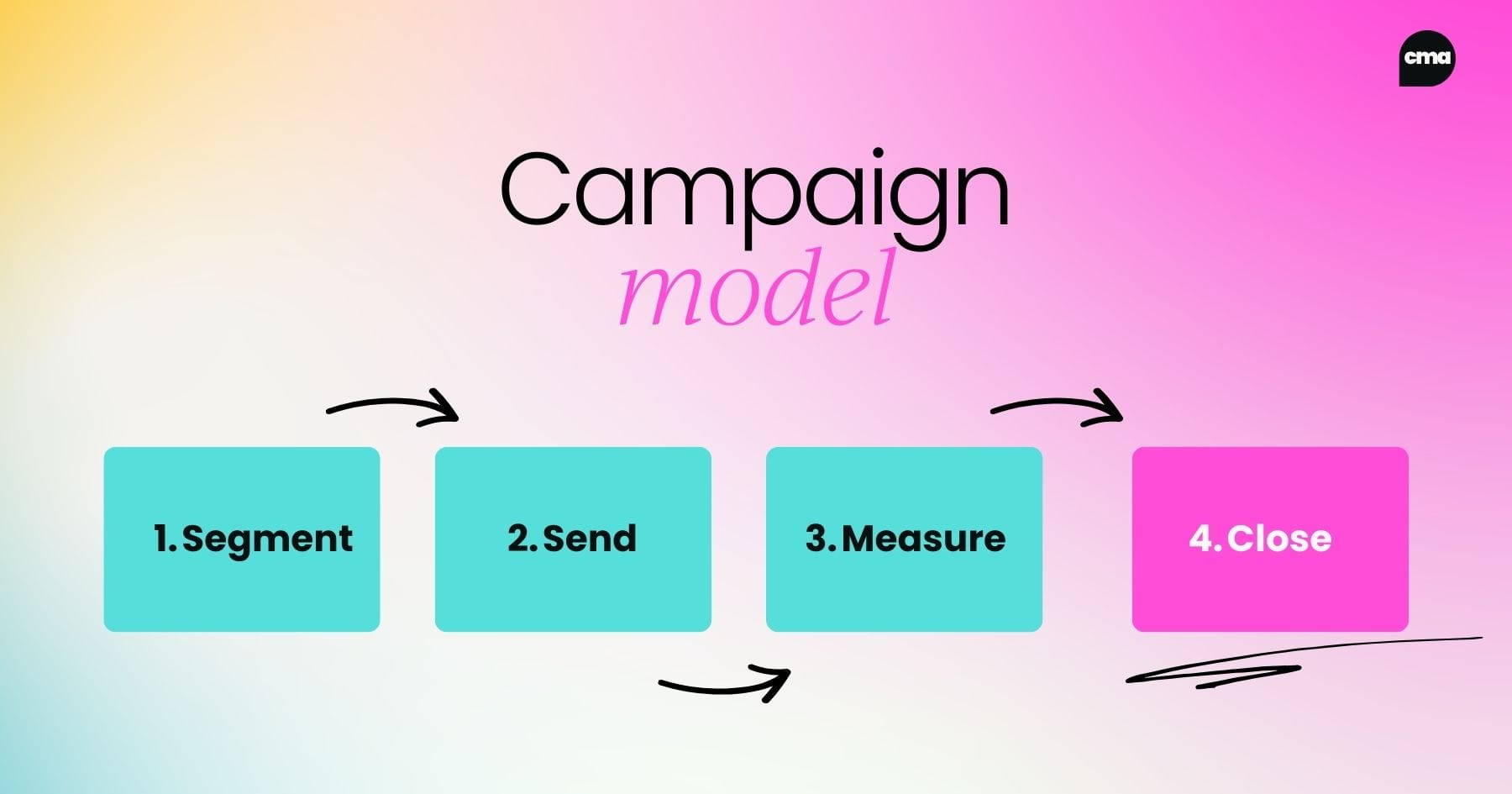
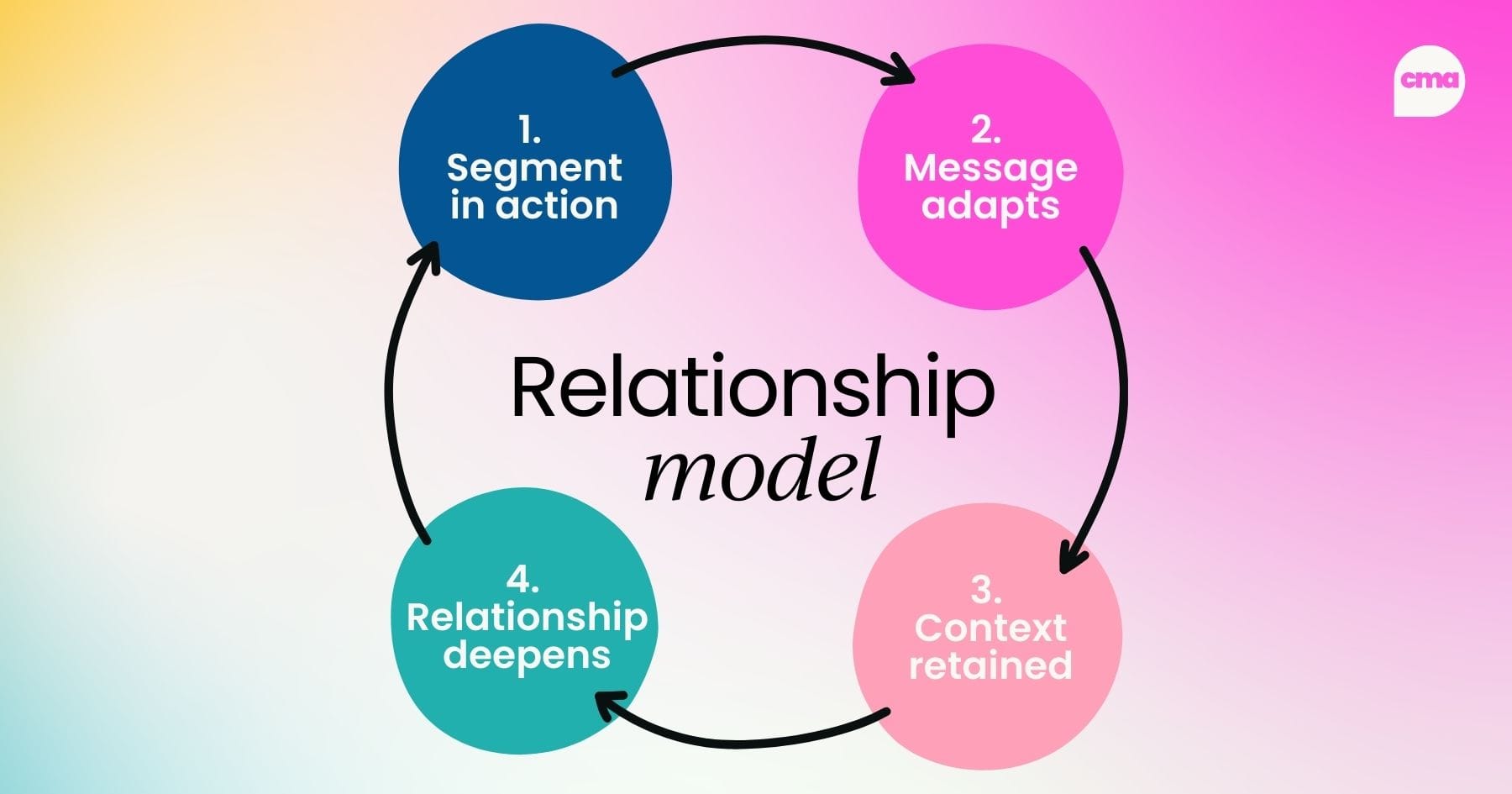
Campaigns have beginnings and ends; relationships don't. And when customers interact with a lifecycle program that lacks continuity, they feel it even if they can't name it.
They open less, click less, and start treating your messages the way most people treat catalogs addressed to "current resident."
What memory actually looks like in practice
In customer marketing, memory means your messaging responds to what a customer has actually done, not just what segment they fall into.
For example, a memory-informed message knows a particular customer contacted support two weeks ago, that their last session was unusually short, and that they've historically responded better to a direct product prompt than a nurture sequence. It responds to that context, not a category.
The signals that make this possible are usually already sitting in your data: recency and frequency of product use, channel engagement history, how a customer has responded to past campaigns, support interactions, and purchase or expansion behavior. Most lifecycle programs capture this somewhere. The gap is whether that data is actually shaping what gets sent, to whom, and when.
When teams build triggered campaigns around specific customer intent signals, rather than calendar-based or broadly segmented sends, the results tend to be meaningfully different. Nordnet, for example, saw open rates above 70% and click-through rates between 10-20% on triggered campaigns built around customer behavior. Better timing, not better copy, made the difference.
Building memory into your customer marketing
A practical place to start: audit your lifecycle program for memory gaps. Go through your active campaigns and ask what each message actually knows about the customer receiving it. If the answer is mostly "their segment and their email address," you have room to work.
A few questions worth sitting with as you go through this:
Does your re-engagement sequence account for why someone went quiet? Can it tell the difference between a customer who disengaged after a frustrating support experience and one who just got busy? Those are different conversations.
Does your post-purchase or onboarding flow respond differently to a long-tenured customer trying a new product versus a brand-new one? The things worth saying to each of them are not the same.
Do your expansion or upsell messages account for a customer's actual product usage history, or do they go out on a fixed schedule regardless of behavior?
Building memory into your programs rarely means rebuilding everything. It usually starts with identifying two or three moments in your existing journeys where behavioral context would change what you'd say, and then confirming the data needed to inform that context is actually connected to your message logic.
That might mean pulling a customer's last support ticket date into a journey filter, or using product usage events to gate an upsell message. From there, you need journey-based tooling that lets you branch on real-time behavior, trigger on events, and build flows that adapt rather than just execute.
Where AI fits in
Memory at scale is, practically speaking, an AI problem. A skilled marketer can track context for a handful of customers. For thousands, let alone tens of thousands, you need a system that handles the operational complexity for you.
AI makes it possible to surface the signals that matter, find patterns in customer behavior that wouldn't be visible in aggregate data, and trigger the right response at the right moment without requiring a human to write a rule for every possible scenario.
In practice, that might look like identifying which customers are likely to churn before they've gone fully quiet, so your re-engagement sequence fires while there's still something to save. It doesn't replace your judgment about what a relationship should feel like.
Instead, it handles the logistics of making that judgment apply at scale, across every customer, all the time.
If you're working through how AI fits into your team's day-to-day, this guide to AI-powered lifecycle marketing covers the practical side – less about the technology in the abstract, more about how to use it to do what you're already trying to do, better and at a greater scale.
Relationships compound when marketing remembers
The goal of lifecycle marketing has always been relationships that deepen over time. Memory is what makes that possible in practice. Relationships shouldn’t reset every time you hit send. When every message reflects some genuine awareness of where a customer has been with you, the relationship has continuity.
The metrics that follow are the ones further downstream: customers who expand, who refer, who stay long past the point where they might have quietly moved on. A customer who feels like your marketing actually knows them is more likely to respond, more likely to stick around, and more likely to evangelize.


Customer marketing alliance insider
Thank you for subscribing
Level up your customer marketing alliance career & network with customer marketing alliance experts.
An email has been successfully sent to confirm your subscription.
 Follow us on LinkedIn