








One of the biggest missed opportunities in product and marketing strategy is failing to fully harness the voice of the customer.
We’ve all seen it happen: decisions made in isolation, roadmaps shaped by internal opinions, and assumptions about what customers want that don’t hold up under scrutiny.
But I believe customer insights, when captured and acted on with intent, can be one of the most powerful drivers of business success. They don’t just validate strategy: they shape it. They inform how we go to market, how we build, and how we grow.
So, let’s explore what building a voice of customer function really looks like, how communities and feedback loops can influence product direction, and why creating a culture of listening is key to long-term impact.
Why customer insights matter in AdTech
One of the first questions I asked myself when stepping into my role at Taboola was simple: why do we need customer insights, especially in the AdTech space?
The answer, to me, is clear: AdTech is a volatile industry. Things move fast. There’s constant disruption, whether it’s evolving regulations, shifting audience behavior, or big announcements like Google’s changes around third-party cookies. That uncertainty creates pressure, but it also creates opportunity.
When you actively listen to your customers, you start to see patterns and trends long before they hit the mainstream. It’s how you stay ahead of the curve.
By capturing insights directly from advertisers, we gain a deeper understanding of shifts in their priorities – why they’re increasing spend on social or search, or why they’re pulling back from those channels altogether due to diminishing returns.
That kind of intelligence helps us identify white space and build better, more relevant solutions.
The difference between data and insights
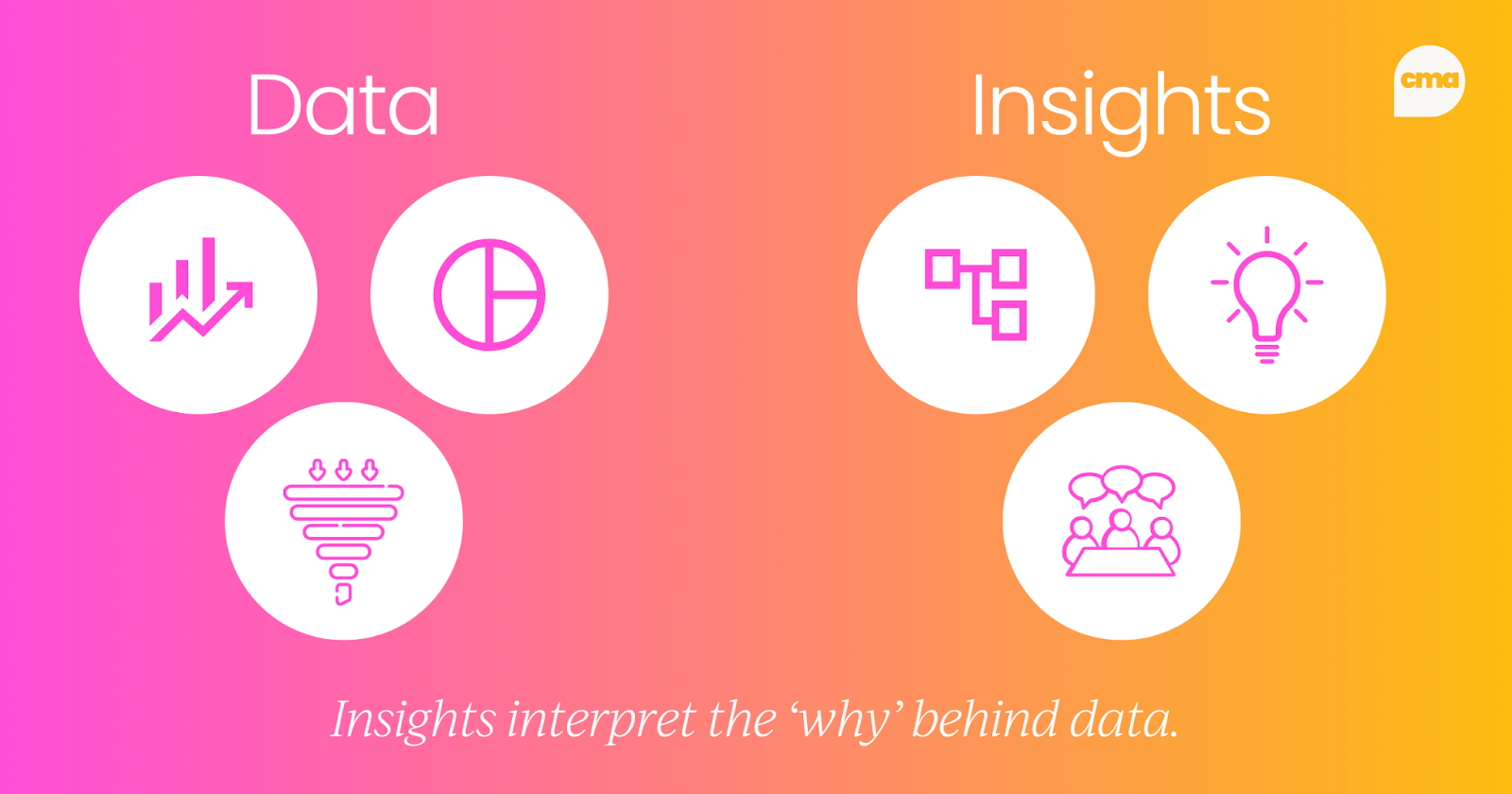
There’s an important distinction to make between data and insights.
Data on its own isn’t meaningful unless you know what to do with it. Insights are about interpretation.
They reveal the “why” behind customer behavior: why someone is spending more with you, why they aren’t, or why they’re dissatisfied.
That’s where the voice of the customer (VoC) becomes critical. When I joined Taboola in May 2024, the company was ready to build a formal VoC and Insights function – and that challenge really appealed to me.
It’s rare to find a role that’s so laser-focused on VoC within a product marketing context, and I was especially excited to work closely with our product teams to better understand the solutions we’re bringing to market.
Building the VOC foundation from scratch
I won’t sugarcoat it, the foundation wasn’t solid when I arrived. There was no established infrastructure, and it’s still a work in progress.
One of the most challenging aspects has been building a cohesive tech stack. Like many companies that have grown through acquisition, Taboola had multiple teams using multiple tools – everything from HubSpot to Snowflake, Qlik Sense to Tableau. Integrating these systems into a unified, functional setup has been tough, but also incredibly rewarding.
We needed to create a holistic view of the customer. That meant stepping back and asking: how do we work across departments to create a 360-degree understanding of our accounts? And how do we ensure we’re not just collecting data for the sake of it, but actually producing actionable insights?
From scattered systems to a 360° customer view
Our solution was to build an account-level dashboard in Qlik Sense. This dashboard brings together various data points: customer behavior trends, churn risk indicators, upsell and cross-sell opportunities, and qualitative feedback from our customer satisfaction surveys.
It gives our go-to-market teams a much clearer picture of what’s happening in each account. For example, did an account just raise a concern in a survey? Are they showing signals of disengagement? Or are there signs of expansion potential? With this view, our sellers are better equipped to act quickly and in context.
We started small, focusing first on our ideal customer profiles (ICPs). We defined these based on factors like advertiser spend, market potential, and cross-sell opportunity. Narrowing our focus allowed us to build something valuable without boiling the ocean.
Insights as a continuous loop
I often describe the VoC process as a continuous loop. There are three core inputs: feedback on the product, feedback on the service, and broader satisfaction data from surveys and churn analysis.
All of that flows into our go-to-market strategy, and in turn, that strategy influences how customers experience our product and services.
It’s not a one-and-done process. Every insight we gather feeds into a cycle of improvement, shaping how we build, market, and support our offerings. The VoC journey doesn’t end, and that’s what makes it so powerful.

Turning voice of customer data into action
One of the most impactful initiatives we’ve implemented at Taboola has been the launch of a comprehensive 360° customer survey program.
My goal wasn’t just to tick a box or run a basic satisfaction check, I wanted to go deeper. I wanted to uncover the real insights that could drive meaningful change for both our customers and our business.
Because I sit within the product marketing team, it was especially important for me to build a program that not only collected feedback but had a direct influence on the product roadmap and broader vision. That’s exactly what we set out to do.
Going beyond surface-level feedback
Our survey was designed to cover a wide spectrum of satisfaction indicators: product experience, account management, professional services, even the perceived quality of the ads we deliver. But what made it unique was the intention behind it.
I didn’t just want to hear that a customer was “happy”, I wanted to understand whether that satisfaction translated into continued partnership, increased spend, or preference over competitors.
Interestingly, the survey revealed a big gap. While 70–80% of customers rated us highly and expressed satisfaction, that didn’t always correlate with tangible actions like increased investment or long-term commitment. And that contrast was incredibly revealing.
It forced us to question assumptions – something I think too many teams (myself included, in past roles) fall into. We assume we know what our customers think. But when we actually ask them, the reality often looks very different.
Asking better questions, across the business
We structured the survey to include questions across key areas of the customer experience – competition, product satisfaction, account team performance, professional services, and whether our offerings were helping advertisers meet their revenue goals.
This level of depth gave us insights we hadn’t accessed before.
And those insights weren’t just filed away, they drove action.
Some of our biggest ICP accounts gave us very honest, and sometimes negative, feedback. These were our largest advertisers, and their voices couldn’t be ignored. We acted quickly, engaging directly with them to better understand their concerns and ensure we didn’t lose their trust.
At the time I joined, our churn rate was relatively high. Since then, and thanks to a number of initiatives including the VoC program, we’ve managed to reduce churn by 5%. That’s not just a number – it’s a direct reflection of better listening and more tailored responses.
Opportunities for growth and expansion
Interestingly, it wasn’t just the negative feedback that helped us. We also uncovered significant upsell and cross-sell opportunities.
Several customers told us through the survey that they weren’t even aware of certain features or solutions we offered – features that would genuinely help them.
This highlighted a disconnect between account teams and customers, and it’s something we’ve been addressing. In some cases, customers who completed the survey ended up expanding their investment with us shortly after. That, to me, is the power of insight-led engagement.
How advertiser insights helped us reposition Taboola
One of the most meaningful ways we’ve leveraged customer insights at Taboola was to inform and guide a major shift in our go-to-market strategy.
When I joined, Taboola was still positioned primarily as a native advertising company. That label made sense at the time, but it also placed us in a very specific (and limited) category. Native advertising remains a niche segment, and we knew that if we wanted to scale and compete more broadly, we had to evolve.
Senior leadership wanted to differentiate us from both smaller native players and giants like Google and Meta. Competing head-on with those platforms in search and social wasn’t realistic, but we saw an opportunity to reposition ourselves as a broader performance marketing company, offering solutions beyond search and social.
But before making such a significant move, we needed customer validation.
Customer validation: What the market really thinks
To get that validation, I led a global insights initiative. Within just a few weeks of joining, I was asked to launch a full-scale customer research project to test this new market positioning. It was one of the most rewarding projects of my career.
We interviewed 40 advertisers across regions, gaining first-hand insight into their pain points, goals, and perceptions of both Taboola and the broader advertising ecosystem.
We asked them what they thought of native advertising, how they viewed platforms like Meta and Google, and what would motivate them to shift budget toward Taboola.
What we heard was clear: advertisers were open to moving spend – if we could deliver performance at scale. Social platforms were yielding diminishing returns, and while search remained essential, advertisers were willing to reallocate budgets if we could meet their KPIs.
That gave us the confidence we needed to move forward with our positioning as a performance marketing partner, not just a native ad provider.
Creating a design partner program for strategic input
We also recognized that some of our advertisers hold an outsized influence on our business. Around 10% of our customer base accounts for roughly 70% of our revenue. These customers are critical, and we wanted to involve them more deeply in shaping our future.
That’s where the idea for our Design Partner Program came in. It’s something between a strategic advocacy community and an exclusive club. Today, the program includes 12 global advertisers who provide high-level feedback on our product roadmap and overall vision.
Unlike typical beta testers, these partners aren’t just trialing new features – they’re helping us decide what should be built in the first place. And their feedback has been invaluable.
In some cases, they helped us realize that features we thought were valuable actually weren’t. In other cases, they helped co-create entirely new solutions that more directly supported their goals.
That kind of honest, strategic input has helped us prioritize the right innovations and avoid wasting time on the wrong ones.
Building an early adopter community for technical validation
While our design partners help shape strategic direction, we also needed an ongoing source of tactical, technical feedback. That’s where our early adopter community comes in.
This community includes around 300 advertisers, ranging from SMBs to large enterprises. They’re our power users, the ones who help us beta test new features, identify bugs, and tell us whether our solutions are actually working in the field.
This kind of day-to-day, product-level feedback is crucial. It allows us to iterate quickly, identify gaps, and optimize the experience before a broader rollout. And it also gives us a way to stay connected with the users who live and breathe our tools.
Different communities, different purposes
One of the key lessons I’ve learned is that you can’t rely on a one-size-fits-all approach to community. Your most strategic customers aren’t necessarily the ones who will give you the most detailed technical feedback and vice versa.
That’s why we’ve built multiple communities with different purposes:
- Our Design Partner Program delivers strategic, vision-level input from senior stakeholders.
- Our Early Adopter Community supports tactical testing and technical validation from hands-on users.
Each community plays a critical role. Together, they ensure that we’re not just building for the market, we’re building with the market.
And behind every product launch, brand revamp, or strategic shift at Taboola, there’s a huge amount of unseen work, work grounded in listening to the customer and turning those insights into action.
Final thoughts: Building a culture of insight and community
I’ve worked with advocate and customer communities throughout most of my career, and I can confidently say that at Taboola, these communities are directly shaping the performance marketing strategy we’re building.
The progress we’ve made over the past eleven or twelve months simply wouldn’t have been possible without intentionally investing in our customers – not just in terms of budget, but in time, focus, and care.
That investment has taken many forms: structured surveys, targeted research, dedicated programs for key accounts, and ongoing engagement with technical users. But more importantly, we’re beginning to embed these practices into our culture.
It’s not enough to run a VoC survey once a year and hope for insights. What we’re really working toward is a voice of the customer culture – one where insights are continuous, communities are empowered, and feedback loops actively influence how we work across product, marketing, and go-to-market teams.
We’re not there yet. I’d say we’re halfway. But I’m incredibly optimistic. Because when companies truly commit to listening, and act on what they hear, that’s when you start seeing real, lasting impact.
This article is based on a presentation given by Valerio at our Customer Marketing Summit, New York 2025.
Catch up on this presentation, and others, using our OnDemand service. For more exclusive content, visit your membership dashboard.


Customer marketing insider
Thank you for subscribing
Level up your customer marketing skills and connect with experts worldwide.
An email has been successfully sent to confirm your subscription.
 Follow us on LinkedIn



Start the conversation
Become a member of Product Marketing Alliance to start commenting.
Sign up now