











Mastering the complexities of marketing for multiple products is essential for driving business success.
I’m Cate Vanasse, Director of Global Customer Marketing at Talkdesk (and formerly at Cisco), and throughout my career, I’ve developed a keen understanding of what it takes to succeed in both single-product and multi-product environments.
Whether you're shifting from marketing one product to many or balancing diverse product lines, prioritization, and strategic dexterity are crucial.
In this article, I’ll share the key strategies and tools that have helped me thrive, from segmentation and targeting to leveraging the voice of the customer and focusing on the entire customer experience.
Defining customer marketing
When I think about customer marketing, I always categorize it into three main pillars:
- Voice of the Customer – This includes initiatives like advisory boards, briefing centers, insights, and NPS (Net Promoter Score).
- Advocacy – People often associate customer marketing with advocacy, such as case studies, testimonials, and references. But it goes far beyond that, encompassing the development of evidence to support the brand.
- Lifecycle management – From onboarding, upsell, cross-sell, and renewals, lifecycle management ensures the customer’s journey is supported and optimized every step of the way.
Depending on the role, your focus may vary—sometimes it's all three pillars, while in other cases, it may be just one or two.
 Eve Chatfield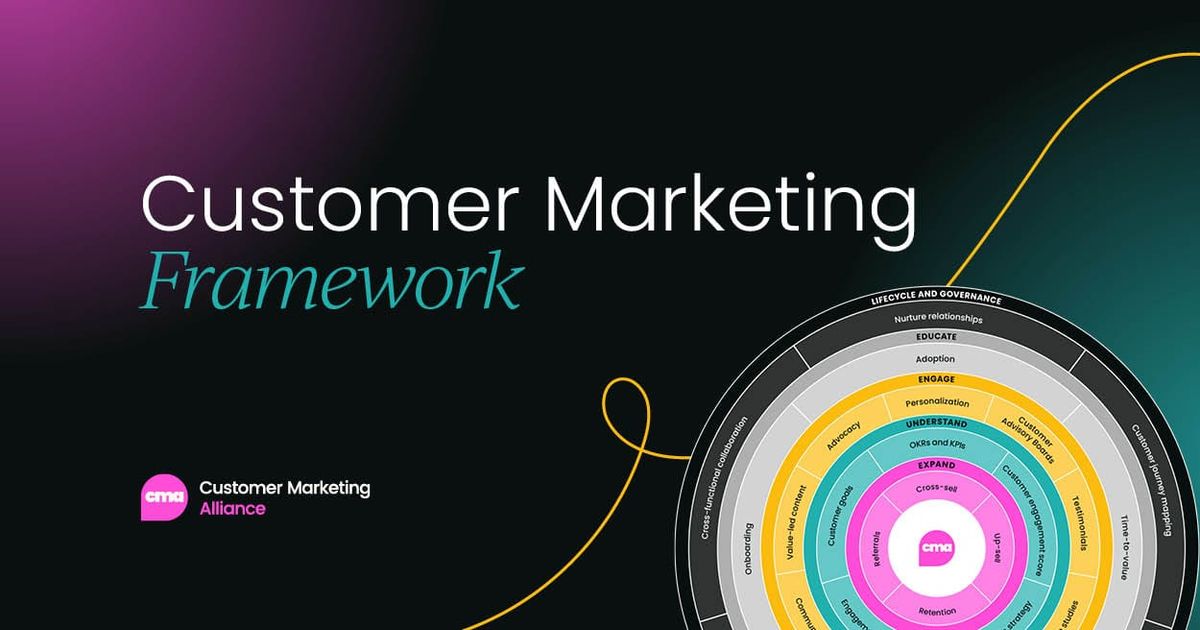
Prioritization and focus
When you’re faced with limited resources—whether it's one hour or one dollar—prioritization becomes crucial.
The question is, how do you make the right decisions on where to invest that time and money? This is where we turn to tried and true marketing fundamentals to guide us.
One of the key strategies in this process is segmentation. While this is a complex topic that could easily fill an entire course of study, I'll touch on some high-level considerations to get you started.
First, think about your total addressable market. Who are all the potential customers that might need your product? More importantly, do they have the means and ability to purchase it? This broad view helps you define your starting point before narrowing down your focus.
Align on marketing goals
Once you have a sense of your market, the next step is to be crystal clear about your marketing goals.
Are you looking to grow your existing customers' wallet share, or are you aiming to generate new leads? I had an experience at Expedia Corporate Travel where this became critical. We were launching a campaign that was explicitly focused on increasing spend from our current clients. To me, it was clear this was about growing wallet share.
But when I presented the strategy, one of the executive sponsors immediately asked, "Where are the new leads?"
That moment highlighted the importance of alignment. Before you start any campaign, make sure everyone is on the same page about the objective. Being aligned on your goals not only directs how you spend your resources but also ensures that the entire team understands what success looks like.
By focusing on these foundational elements—defining your total market and ensuring alignment on goals—you’ll be better equipped to make decisions on where to invest your time, money, and energy for the greatest impact.
Segmentation criteria
There are many ways to approach segmentation, and it’s critical to choose the criteria that best align with your business and marketing goals.
Throughout my career in B2B marketing, I’ve used several segmentation methods depending on the situation and product line.
Common segmentation approaches in B2B:
- FirmographicsThis is one of the most common methods in B2B marketing. You can segment based on criteria such as organizational size, geography, or industry. For example, a product may be more suited to mid-market companies in a specific region or an industry like healthcare or finance.
- TieringAnother useful approach is tiering, where you categorize customers based on how closely they align with the overall value your business offers. This could involve focusing on high-value clients or those most likely to benefit from your solution.
- BehavioralBehavioral segmentation looks at how your customers interact with your product or brand. This might include user status (e.g., new vs. returning customers), loyalty, or purchase history. It can help you focus on customers who are likely to generate repeat business or grow their engagement.
- Account-Based Marketing (ABM)Many of us are familiar with ABM, where the focus is on specific key accounts—targeting particular logos that you want to bring on board. This approach often involves tailored strategies for individual companies and decision-makers.
- Persona-basedIt’s important to consider the specific personas involved in the buying decision. Whether it's C-level executives or mid-level managers, understanding who influences the purchase can help you tailor your messaging and approach accordingly.
Eve Chatfield
Mixing and matching segmentation criteria
It's important to recognize that the right segmentation strategy for you may involve a mix of these criteria. You can—and should—combine firmographics, behavioral insights, and account-specific strategies to create a segmentation plan that works for your unique situation.
Once you have defined your segments, it's time to put it all together and pressure test your strategy. This is where competitive and industry information can be invaluable, helping you build a comprehensive view of your market landscape.
Personalization
The importance of personalization cannot be overstated. The temptation, especially with limited resources, is to apply the same approach across every product line. But it's vital to take the time to tailor your segmentation and strategy for each product, even if it means focusing only on the key product lines for a particular quarter or time period.
In short, there’s no one-size-fits-all approach. Successful segmentation involves taking the time to understand your market and carefully selecting the criteria that will give you the best chance for success.
Identifying the right customer focus
Once you've laid the groundwork for segmentation, the next step is to determine which type of customer to focus on. This is where you need to ask yourself some critical questions:
- Whose needs can we best satisfy?
- Who will be the most profitable customers?
- Are we equipped to reach and serve them effectively?
You need to evaluate whether the effort you're investing in a particular segment is truly worth it. In other words, is the juice worth the squeeze? It’s essential to assess whether the segments you’ve identified are sizable and profitable enough to warrant targeting.
At the same time, consider if your company has the right resources—both in terms of tools and personnel—to effectively engage that market.
Tailoring the approach for each product line
This process can, and should, vary for each product line. Different products may serve different types of customers, so what works for one may not work for another. This is where collaboration with other teams becomes incredibly valuable.
If you have access to a product marketing team, audience marketing team, or detailed personas, now is the time to pull in that data and expertise. By blending this information, you can get a more complete picture of who your ideal customer is for each product and how best to reach them.
Through it all, keep these key questions and milestones as your North Star. Whether you're designing campaigns from a lifecycle perspective or engaging with customers for advocacy, knowing which customers to prioritize will guide your strategy.
It’s important to remember that these answers will differ based on the specific product or service you’re promoting, so don't shy away from adapting your approach for each unique scenario.
Bringing segmentation and targeting together
We’ve discussed segmentation and targeting from a high-level perspective, but how do these two concepts work in harmony?
Think of segmentation as the process of mapping out your entire landscape. It’s about understanding the market as a whole and breaking it into sections where there are common needs and characteristics.
Let’s use a simple analogy. Imagine you’re looking at a mountain full of biking trails. By segmenting, you’re mapping out all the trails—some are longer, some are more challenging, and each has its unique characteristics. In marketing terms, this means you've divided your market based on common factors like customer needs, demographics, or behaviors.
Now, when we think about targeting, this is where you zoom in on a specific trail—the one you decide to focus on. You’ve already mapped the mountain, and now you’re choosing which trail you’re going to explore.
In marketing, targeting is the process of selecting which group or segment you will focus your efforts on, ensuring that you’re concentrating your resources on the most promising opportunities.
By having a clear segmentation strategy, you can ensure that your targeting decisions are based on solid data and insight, ultimately leading to more effective marketing campaigns.
Building strategic dexterity across product lines
We’ve touched on segmentation and targeting, but how do you develop the strategic dexterity to do justice to all the different product lines you manage, across Voice of Customer, advocacy, and lifecycle?
The key to this, like so many things in marketing, often comes back to Voice of the Customer.
However, it's not enough to just passively listen to customer feedback. You need to dive deeper and understand the unique dynamics at play across different products and solutions. When identifying advocates, for example, don’t simply rely on a high Net Promoter Score (NPS) to assume someone is an ideal advocate.
Advocacy is about real people, not just logos, and those individuals come with varied preferences, motivations, and experiences.
Beyond the NPS score: Understanding customer nuances
Too often, we make the mistake of treating customers as a monolithic group based on their NPS or other broad metrics.
For example, it’s tempting to approach someone with a high NPS score and assume they’d be willing to advocate for your product. But as we all know, customers are complex. Just because they’re happy with one aspect of your offering doesn’t mean they want to be a spokesperson for the entire product line.
A great example comes from my time at Cisco. We had a fantastic opportunity to engage a female CTO who was highly respected in the industry. Naturally, we wanted to feature her on stage to highlight her success with our products.
But despite several attempts to involve her in various presentations, she repeatedly declined. This left us baffled—after all, she had such positive regard for the company!
It wasn’t until we met in person and had a deeper conversation that we understood the real reason for her reluctance. She was a huge fan of one particular product line but wasn’t comfortable being a spokesperson for others she didn’t fully endorse. This was a valuable lesson in not assuming that a satisfied customer with a high NPS is ready to advocate across the board.
Tailoring your advocacy approach
This experience taught me the importance of digging deeper into the nuances of customer relationships. It's essential to work closely with your account teams and use your reference management tools wisely.
Don't just categorize customers as advocates or non-advocates—get specific. Where are they advocates, and where aren’t they? What products or services do they feel strongly about, and which ones do they feel more neutral or even negative toward?
By understanding these nuances, you can better tailor your outreach and ensure you're placing customers in advocacy roles that truly align with their passions. This creates more meaningful moments for them and allows you to showcase their success in a way that’s authentic, rather than forcing them into uncomfortable situations.
In the end, it’s about being thoughtful in how you engage with customers and ensuring that their experiences are represented in a way that highlights their strengths while aligning with their genuine preferences.
Keeping the whole customer experience in mind
One final piece I want to emphasize is the importance of keeping the whole experience in mind.
As marketers, it’s easy to get caught up in the details—we want to know every little aspect and often focus intensely on specific products or metrics. Whether you're responsible for marketing three products or three hundred, it’s essential to zoom out and consider the broader customer journey.
For example, let’s say you're tasked with growing customer advocacy or increasing spend on a specific product, like mountain bike pedals. It’s tempting to dive deep into that one product and focus all your efforts there.
But to truly connect with your customers, you need to take a step back and look at their entire experience with the bike. Ask yourself:
- What motivated them to buy the bike in the first place?
- How long have they owned it?
- What are their future goals or aspirations as a cyclist?
- How does riding the bike make them feel?
Understanding these elements gives you a much richer picture of who your customer is and how your product fits into their broader experience.
It’s a balance of focusing on the specific product you’re marketing while keeping the entire customer journey in view. The customer's relationship with your product doesn’t exist in isolation—it’s part of a larger ecosystem of experiences, emotions, and needs.
By maintaining this holistic perspective, you can create more meaningful connections and ultimately build stronger, longer-lasting relationships with your customers.
So, even when you need to zoom in, don’t forget to occasionally zoom out. This broader perspective will help ensure your marketing efforts are aligned not just with the immediate product, but with the full scope of your customer’s experience.
Key strategies for managing multiple product lines
When you find yourself in a situation where you’re learning new product lines or pivoting from managing a small portfolio to a much larger one—whether it’s from a few products to hundreds, as was my case at Cisco—there are a few critical points to keep in mind.
1. Ruthless prioritization
The first step is to adopt a mindset of ruthless prioritization. If you have just one hour and one dollar, where should you invest it? Where is your best bet? This is all about making the most of your limited time and resources by focusing on what will deliver the most impact.
2. Map out your market
This is where segmentation comes into play. We talked about mapping the mountain—identifying your total addressable market, defining your marketing goals, and determining your segmentation criteria. This process helps you understand where your opportunities lie.
3. Zero in on the right target
Once you’ve mapped out the landscape, the next step is to zero in on the right target. This is about focusing on the sweet spot that will yield the best results. When I think about this, it reminds me of when Marketo first launched lead scoring.
For the first time, we could see both how interested customers were in us (behavioral insights) and how much we should care about them (demographics). This dual approach helped prioritize what should happen next and can still serve as a helpful model for finding the right audience for your product.
4. Listen to the voice of the customer
Be deeply curious about your customers' experiences. These are real people, not just logos. Customer sentiment is nuanced, so take the time to dig into their feedback and understand their perspectives. This insight will guide your strategies for advocacy and engagement.
5. Keep the whole experience in view
Even when you’re focused on specific products or solutions, don’t lose sight of the entire customer journey. Remember that each product fits into a broader context of their experience, and understanding that larger story will help you make smarter decisions about how to engage with them.
Always be learning
While these are the strategies that have worked for me, the truth is, none of us have all the answers.
Marketing, especially in complex environments, is an ongoing process of learning and adapting. I’m always curious to hear what’s working for others and to learn from their experiences. Keep an open mind and stay eager to evolve your approach as you gain new insights.
These foundational strategies will help you stay focused and efficient as you navigate the complexities of managing multiple product lines, ensuring that you're always investing your time and resources where they'll have the most impact.
This article is based on a presentation given by Cate at our Customer Marketing Summit, Boston 2024.
Catch up on this presentation, and others, using our OnDemand service. For more exclusive content, visit your membership dashboard.


Customer marketing insider
Thank you for subscribing
Level up your customer marketing skills and connect with experts worldwide.
An email has been successfully sent to confirm your subscription.
 Follow us on LinkedIn



Start the conversation
Become a member of Product Marketing Alliance to start commenting.
Sign up now